Building on anti-ghosting features
A global marriage app needed a solution to ghosting and a way to adopt healthy closure.
Website
Role
Muzz
Skills
Product Design, User Research
Timeline
Q1 2025

Overview
Muzz, is a market-leading consumer app serving over 20 million global users across multi-regional markets.

The Problem
80% of chats fall silent after 7 days
Despite existing anti-ghosting features on the platform.
A unique factor on the platform is that female members tend to wait for men to initiate the conversation whilst men are seemingly unaware. I needed to build on existing features in order to improve communication, prevent ghosting and encourage healthy closure.
Solution
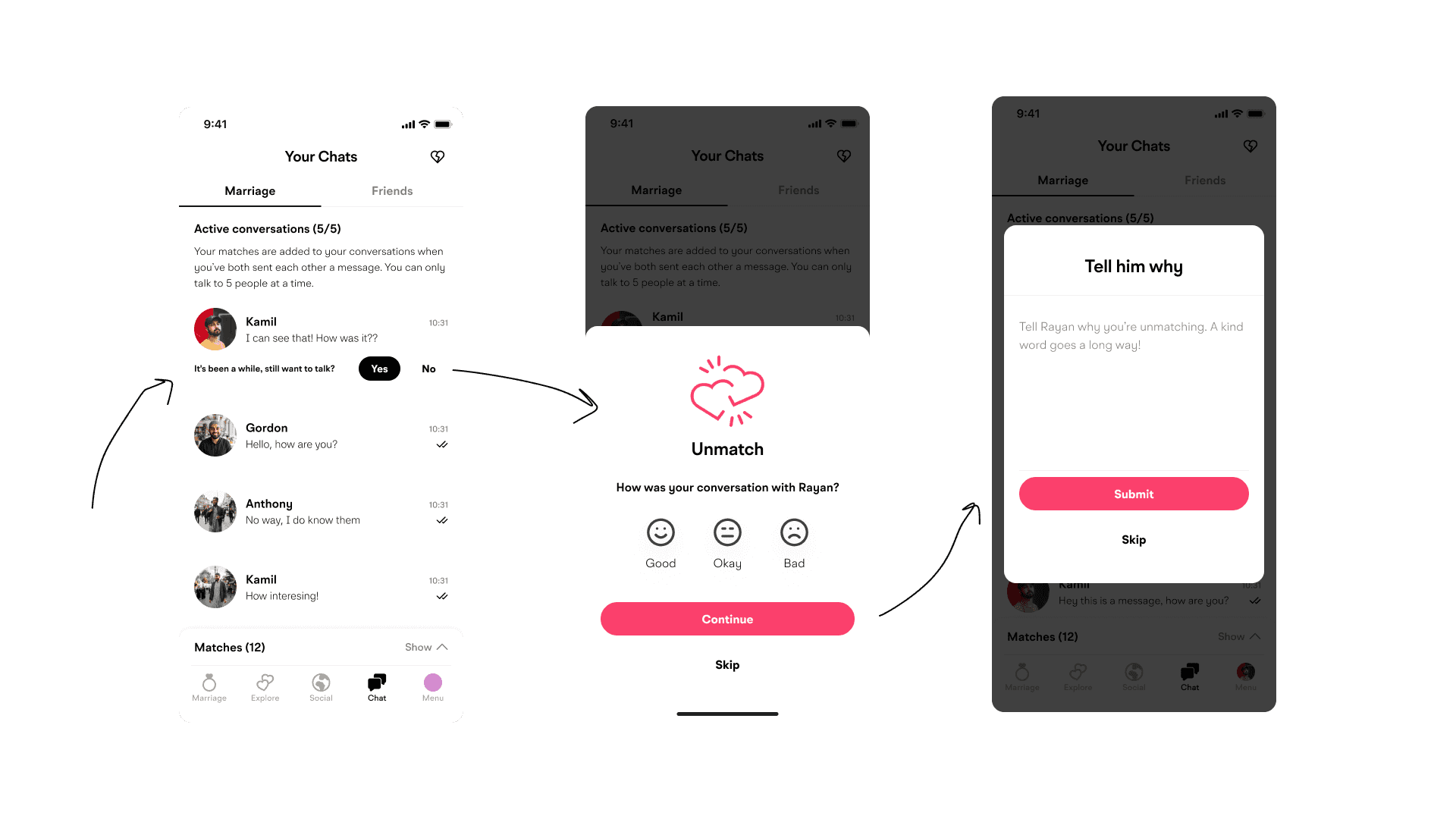
One. After three days of no talking, users would get a countdown to 7 days as well as a reminder to message their match. After 7 days, the app locks until a decision is made on matches they haven’t spoken to.
Two. A new male match screen focused on addressing a unique issue on the app, most Muslim women want Muslim men to message first!
Results
The designs were added to the Q2 roadmap following approval by stakeholders. Results are still pending. The new male match screen will be rolled out in the UK as an experiment.
Team
Shaimaa Osman (Product Designer), Jessica Wagstaffe (Delivery Lead), Cameron Quiale (Backend Engineer), Mehdi Souihed (Backend Engineer) Jon (iOS and Android Engineer)
Research & Discovery
What features are currently trying to tackle ghosting on the app?
72 hour match expiry: Once two members match there 72 hour match expiry, each match shows an active ring losing time. There is a cap of 5 conversations for men and 8 women on the free version of the app.
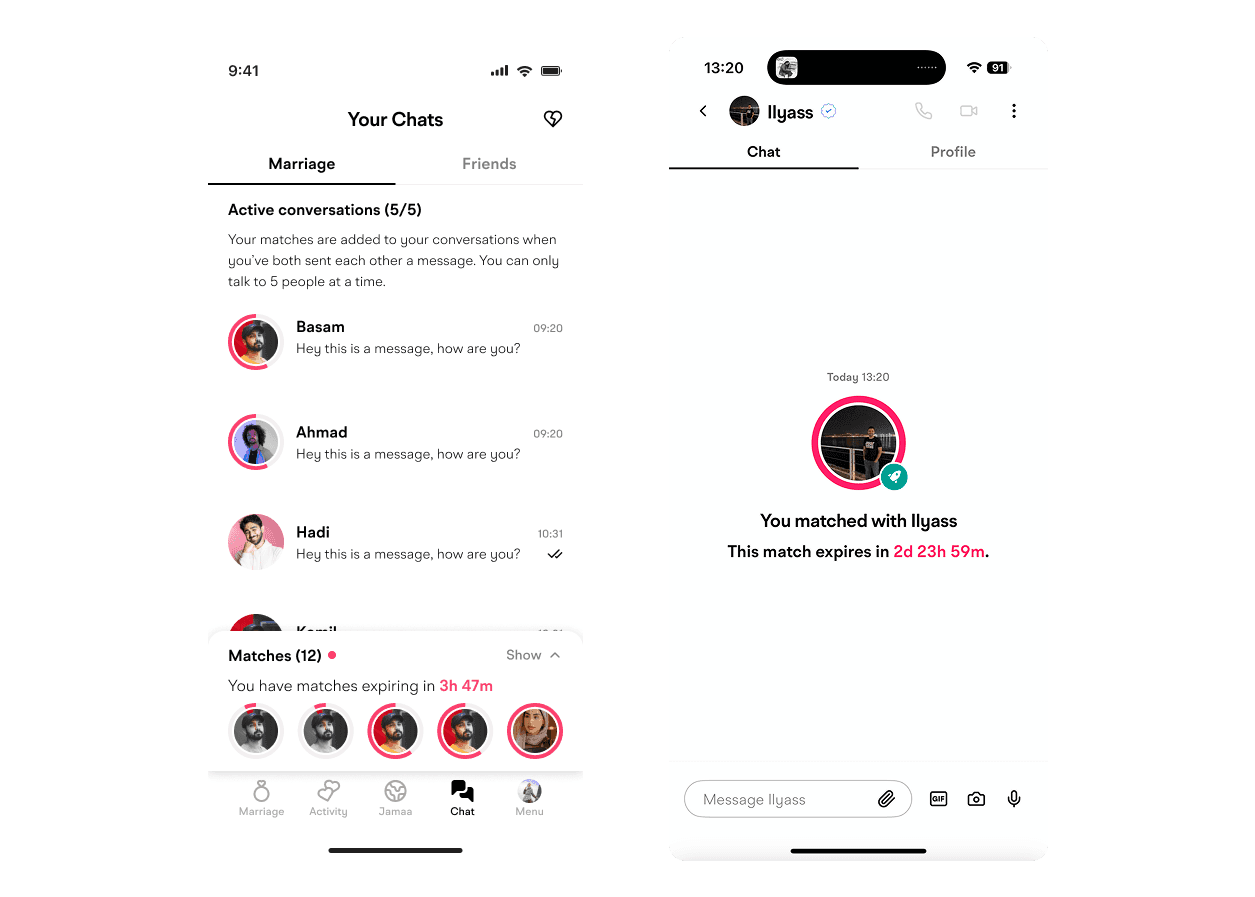
Reminder in the chat list: A passive nudge after 3+ days of silence in a conversation.
What are our users telling us?
The goal was to understand the emotional and behavioural drivers behind ghosting and not just measure it. Here were clear signals from the data after conducting a user survey with 3000+ respondents as well as user interviews.
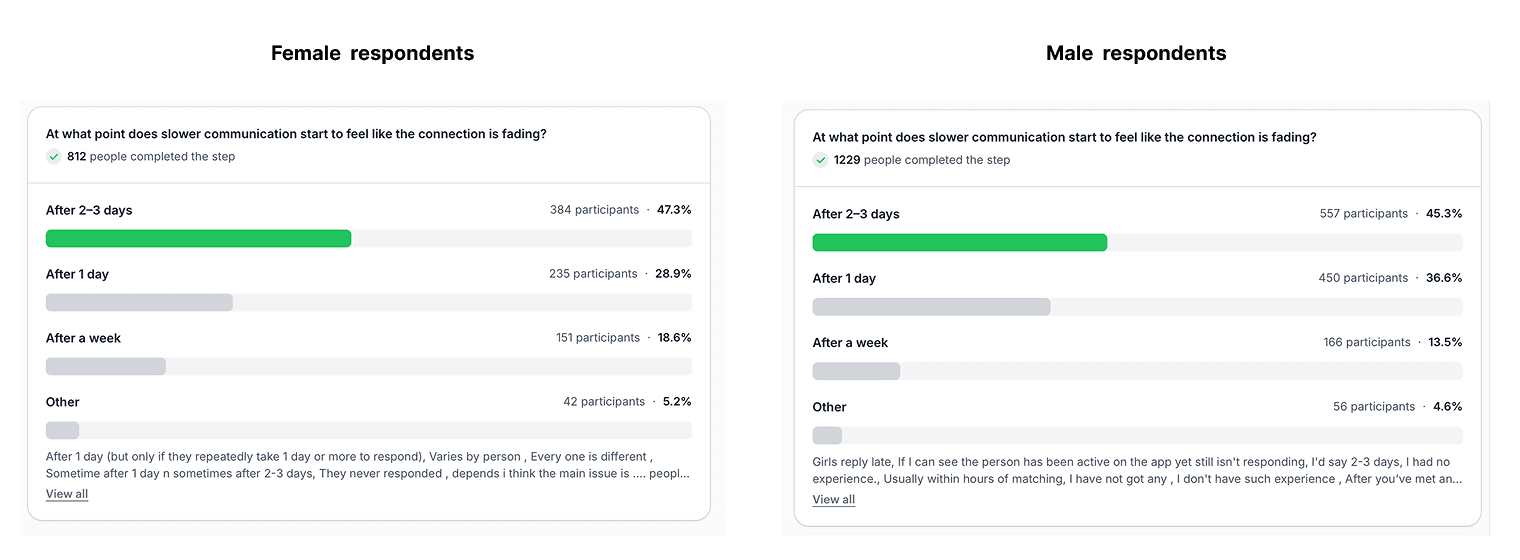
Female respondents | Male respondents |
|---|---|
Goals
| Goals
|
Frustrations
| Frustrations
|
Quotes “It’s hard to tell if someone genuinely likes me or just matched to be nice.” | Quotes "I match with a lot of people who don’t send the first message or are very slow in their response." |
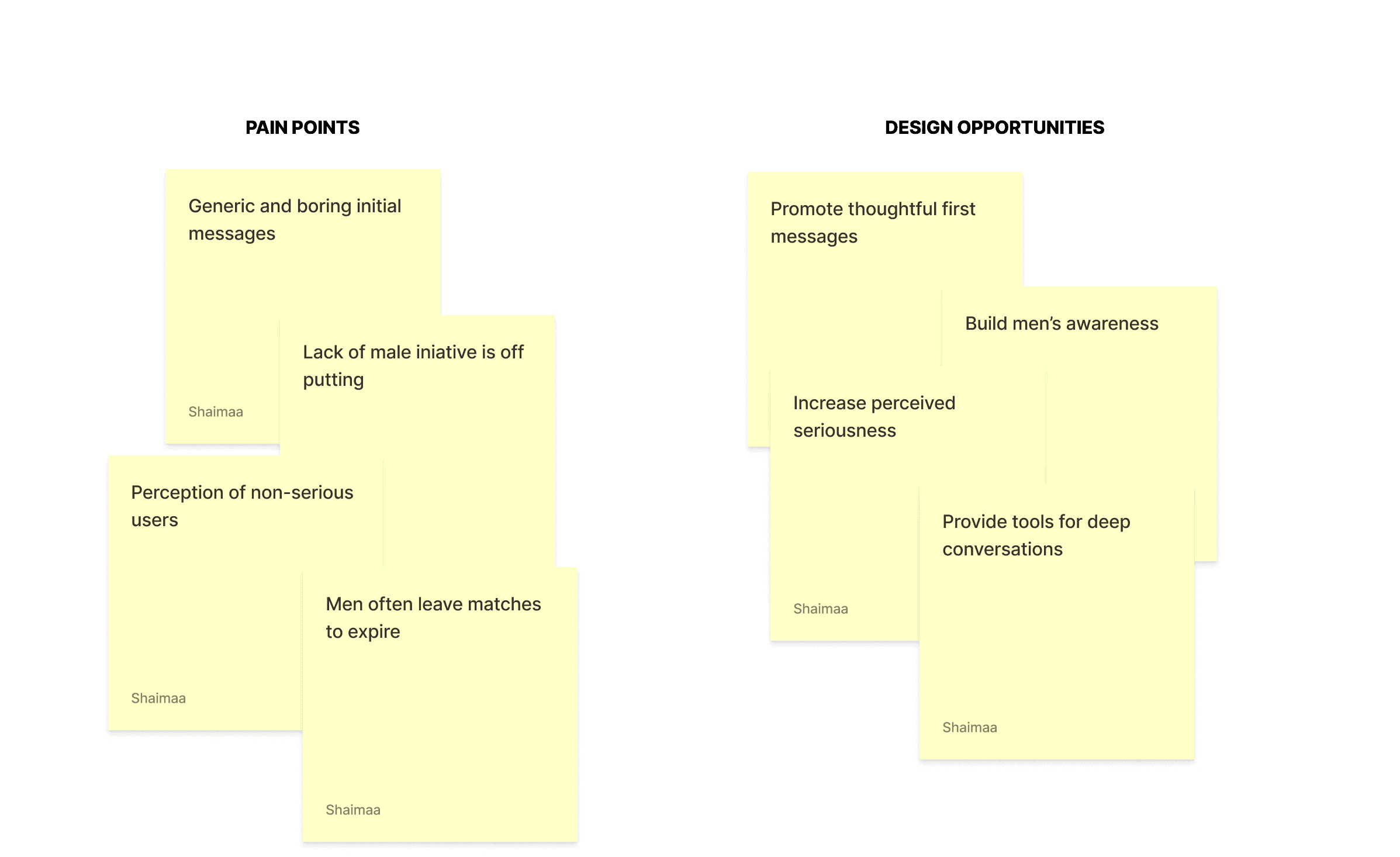
At point of match, these were the common themes for pain points and design opportunities
How are other apps tackling ghosting?
Hinge | Bumble |
|---|---|
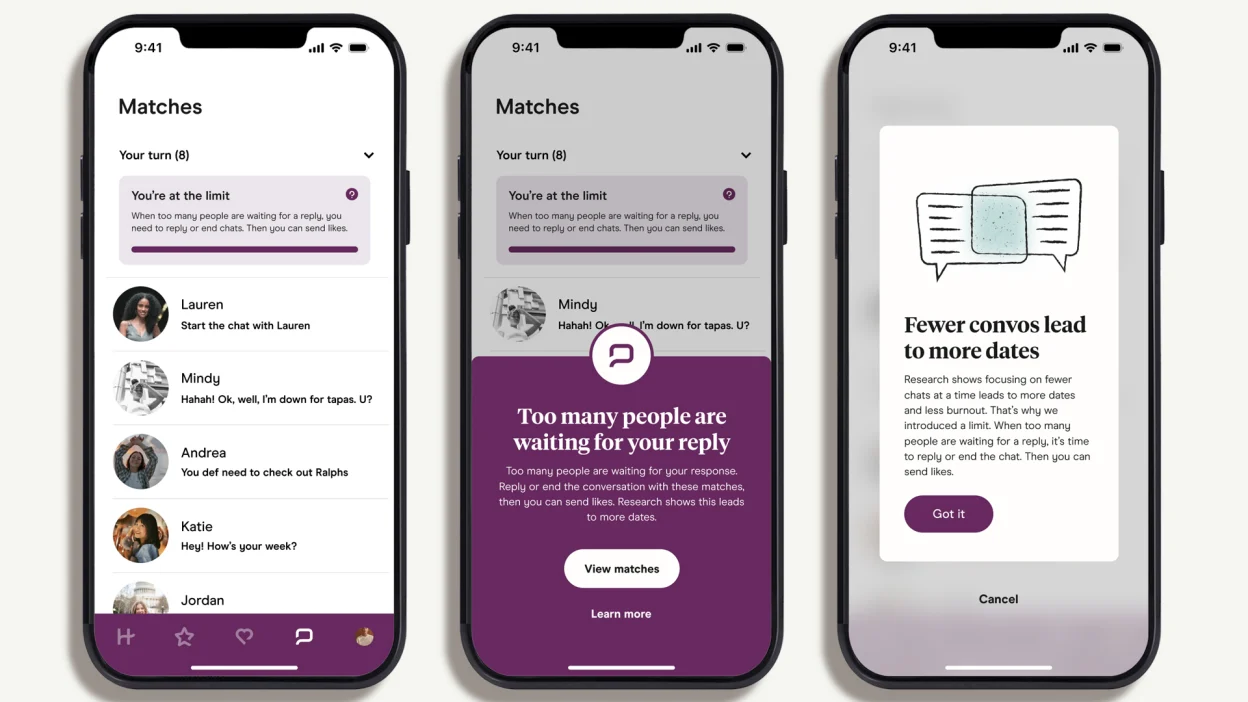 | 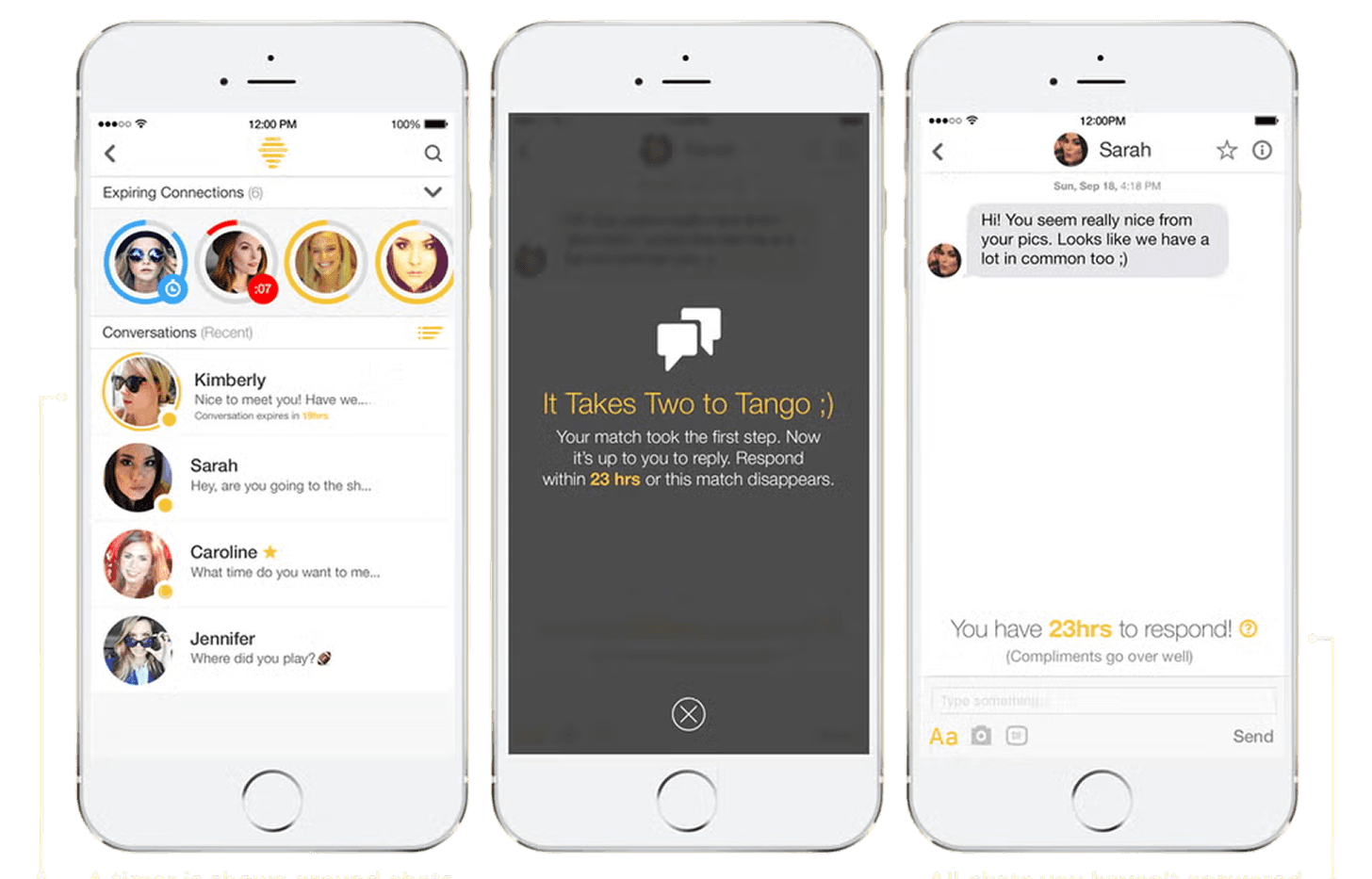 |
Hinge has introduced "Your Turn Limits", daters must continue the conversation in an existing chat where it is their turn to respond. They cannot accept new likes until they make a decision. | On Bumble, there is a 24 hour response window or users are faced with an unmatch. Inactivity triggers the question "are you still into this person" and if there is no response in 24 hours, you are unmatched. |
What didn't work previously: AI openers
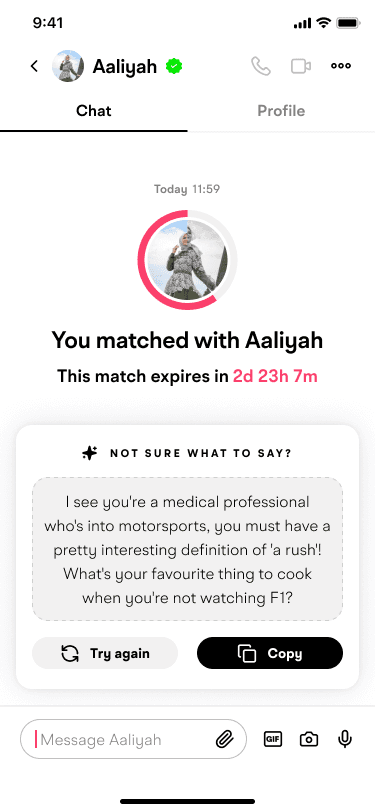 | How it worked | The outcome Match activation percentage remained flat at 71.1% 80% never engaged despite repeated exposure. |
Key design decisions at this stage
After breaking down the initiative and presenting the data to senior management, I designed with the following in mind;
A more rigorous approach will be explored that will lock the whole app for those who are not replying to message
Although the research suggested the connection is fading after 3 days of inactivity, a decision on the match will be need to be made at the 7 day mark
We'll design for a male experience that is more action orientated
There was debate around an option for those who are talking off the app
The user flow
The user flow above reflects the reworked journey I was designing for after point of match with a new male match screen and a flow for how the locking of the app will work.
Ideation
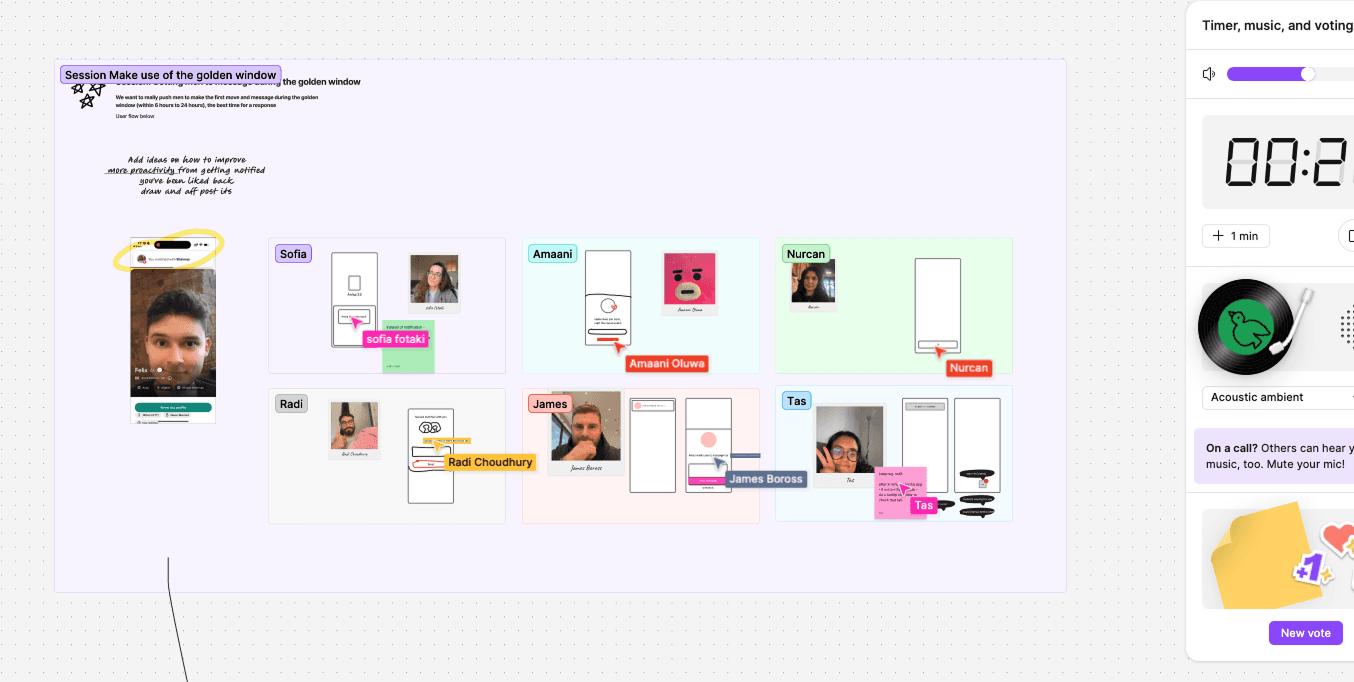
Re-imagining the male match screen
At point of match, I wanted to explore what could be done to encourage male members on taking the lead. So I held a workshop with the product design team to explore options. Informative copy, encouraging nudges and making the moment of match feel like a true active opportunity over passivity were all ideas that came up.
Exploring how locking the app will work
I explored and presented a few options to senior management to approach the app lock feature
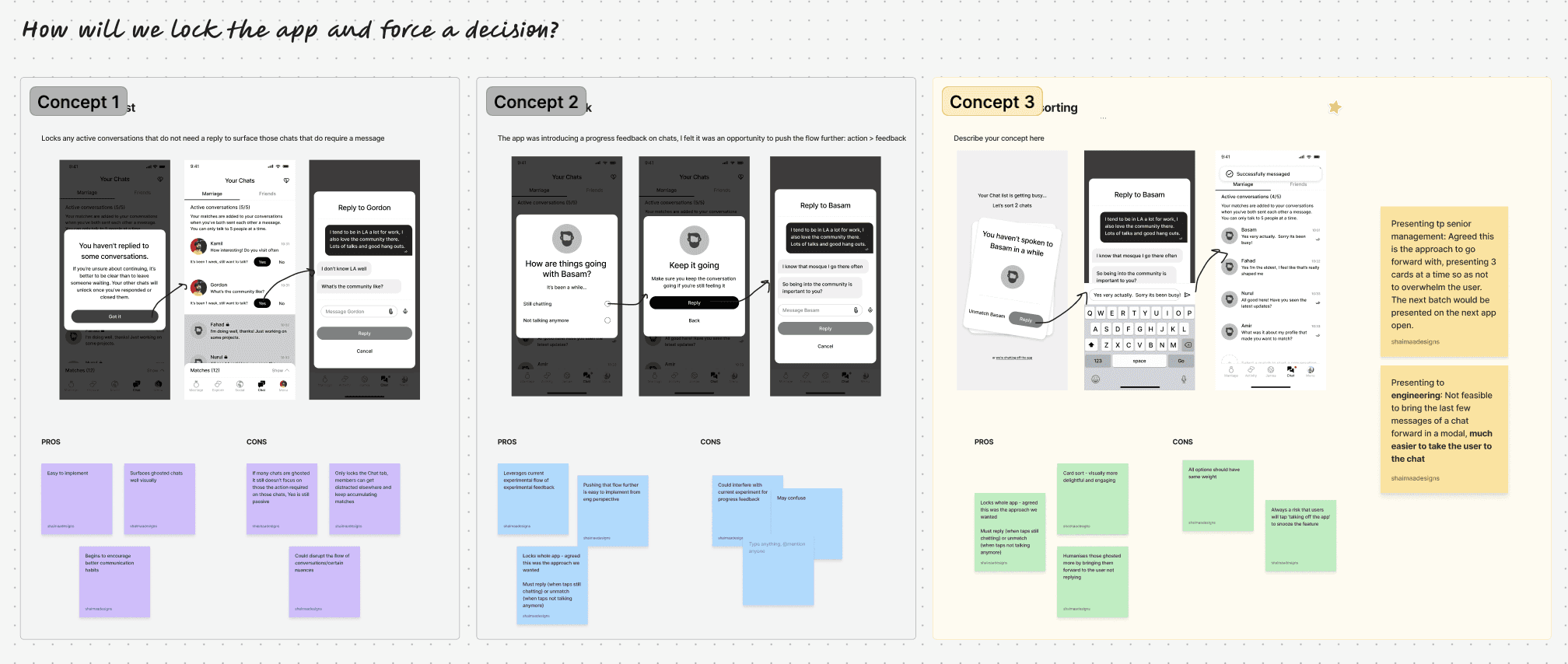
Final Solution
The app lock experience for all members at 7 days
After three days of no talking, users would get a countdown to 7 days as well as a reminder to message their match. After 7 days, the app locks until a decision is made on matches they haven’t spoken to.
What would be measured?
Decrease in ghosted active conversations
Increase in unmatches (healthy signal of closure)
Improvement in user sentiment
The male app experience experiment
The male app experience was rolled out to the UK as an experiment for male members to test success.
How it would work
Match only created if man messages first and the ability to exit without dealing with the match will be removed. The male member must respond to all queue. After a male member gets match, a half sheet educates the man on need to take the lead. A minimum character count of 30 is also introduced.
Iteration
To make the match screen cleaner, another approach was a decision needing to be made on exiting the match screen. This approach included less education but the copy is very action orientated.
What would be measured?
Increase match to active conversation rate
Increase the number of first messages sent (with a reply)
Learnings
Culture is a design constraint
Muzz's identity as a marriage platform meant that every interaction carries more weight than on a casual app. The solution had to feel dignified — for both sides. "Decline" needed to feel respectful, not transactional.
Counter-intuitive metrics signal health
Defining "more unmatches" as a success metric pushed back on conventional thinking. It forced the team to distinguish between metrics that look good and metrics that actually mean good — a valuable framing exercise in itself.
Collaborating with engineers
I made sure to show prototypes to the engineers and provide thorough kick-offs when work is being handed over to build. I realised that involving engineers early in the process meant this last meeting was a lot smoother.

